
When to go to Kruger: a month-by-month reality check
"Kruger is quietest in June"? No, it isn't. "Go in the dry season for the Big Five"? Mostly true, and also the reason everyone you know is there at the same time. The honest answer is that Kruger is a different park every few weeks, and the right month depends on whether you're hunting cats, birds, baby animals, or cheap flights. Here's what each stretch of the year actually gives you.
May to September: the dry season
The bush thins out, waterholes shrink to a few reliable points, and the whole park funnels its animals to the same spots. This is why the dry season has the best raw sighting odds of the year: less cover for the animals, and less work for you. If you have three or more days in the park, this is when they'll earn their keep.
The trade-off is that winter mornings are properly cold. June and July can start at 3 to 8°C, and an open game vehicle at 5:30am turns that into an event. Layers, a beanie, and gloves sound ridiculous for Africa until you're the only person at the gate without them. Days warm up to mild, the dust haze softens the light, and the sunsets in August and September are the year's best.
My pick of the whole calendar is late August to early October: dry enough for great sightings, warm enough to enjoy the mornings, and still green enough along the rivers that the park doesn't look tired.
November to March: the green season
Summer is loud, lush and full of new life. Impala lambs appear from November, migrant birds arrive from Europe and northern Africa, and the bushveld turns a green that photos struggle with. Thunderheads build most afternoons, deliver their rain in an hour, and move on.
What you gain: incredible birding, dramatic light, and critically, the park to yourself. What you lose: easy sightings. Thick green cover hides cats at ten metres, and animals no longer need to queue at water. Some gravel roads close after heavy rain. Midday heat pushes past 35°C, so both you and the wildlife adopt a dawn-and-dusk schedule, which honestly suits everyone.
If you're chasing your first lion and only have two days, this is a gamble. If you're a birder, a photographer, or someone who'd rather share a waterhole with a heron than a convoy, it's the best time of year.
The crowd calendar
Kruger fills up when South Africa is on holiday, which is roughly: the June-July school break, the first weeks of December to mid-January, Easter, and any long weekend. Book camps months ahead for those windows, and expect the H4-1 to feel like a parade. The sweet spots between these (late January, May, August) combine decent conditions with breathing room.
Whatever month you choose, the day has the same shape: be at the gate when it opens, drive the first three hours like you mean it, relax through midday, and go again in the late afternoon.
The one schedule that never changes
Morning is always the answer. Animals are most active in the first hours after sunrise and the last before sunset, in every season. Gate times shift with the seasons though (winter gates open later, close earlier, and yes, they will fine you for being late), which is exactly the sort of thing you don't want to be checking on patchy signal at 5am in a queue of taillights.
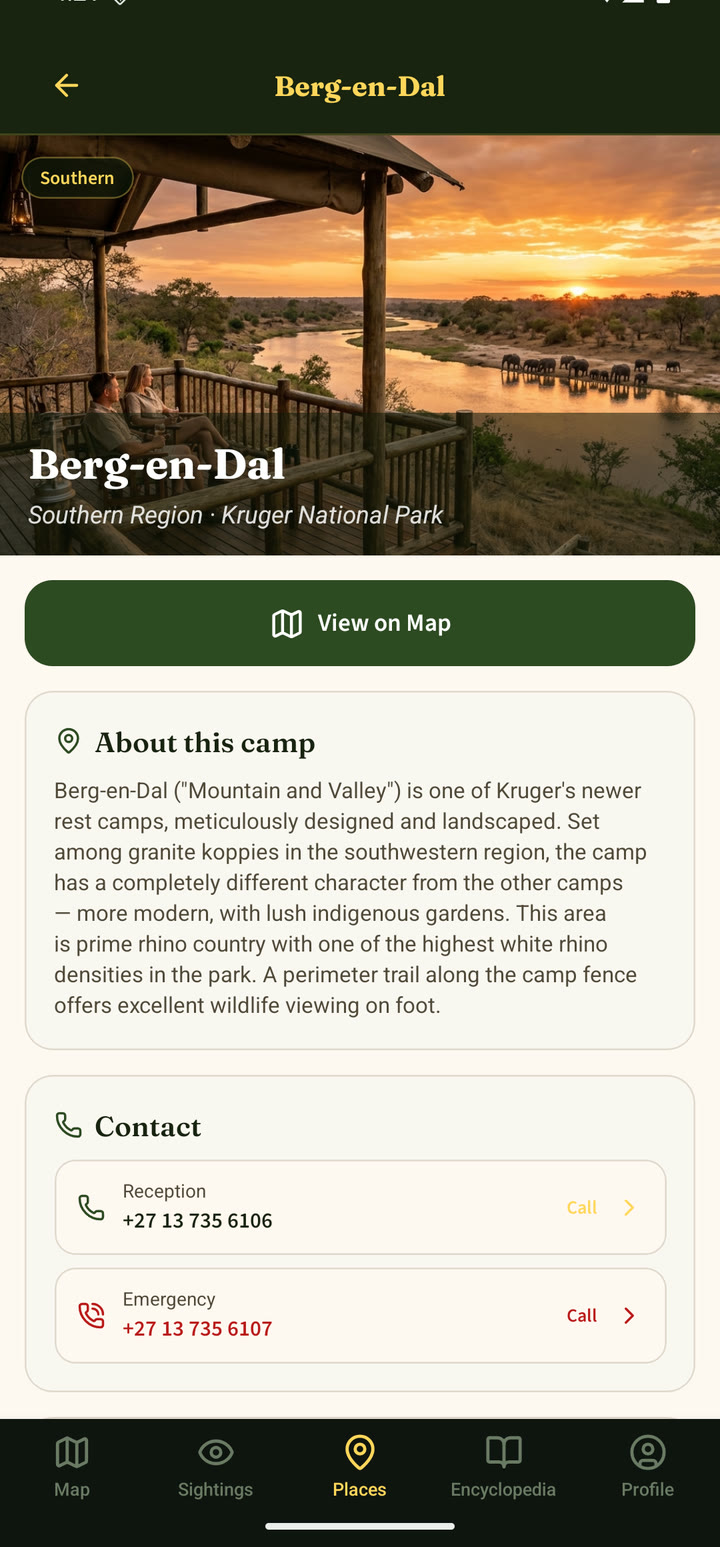
In VeldGuide, every camp page shows both seasonal gate times, and the map's weather panel gives you the day's sunrise and sunset next to the forecast. That's how you plan a 5am start without standing in the dark guessing. If your trip depends on which waterholes are still holding water, ask at reception when you arrive; rangers know, and the app's map helps you find the ones worth the drive.
What to pack, briefly
- May to September: beanie, gloves, a blanket for open vehicles, and sunscreen anyway. The sun at 10am is not winter.
- November to March: rain shell, insect repellent, patience, and a full water bottle per person by mid-morning.
- Any month: binoculars. This is the item people forget and regret.
One more thing worth saying: parts of Kruger, especially the far north, fall in a malaria area. We're writers, not doctors. Speak to a travel clinic before you go and follow their advice, not a blog's.
Planning done? Next, figure out what you're actually looking for, or read where the lions hang out.