
What's in the app
Six things, done properly: the guide, the map, the routes, the sightings, your own journal, and the offline pack that holds it together when the towers are a memory.
Launching soon on iOS and Android.
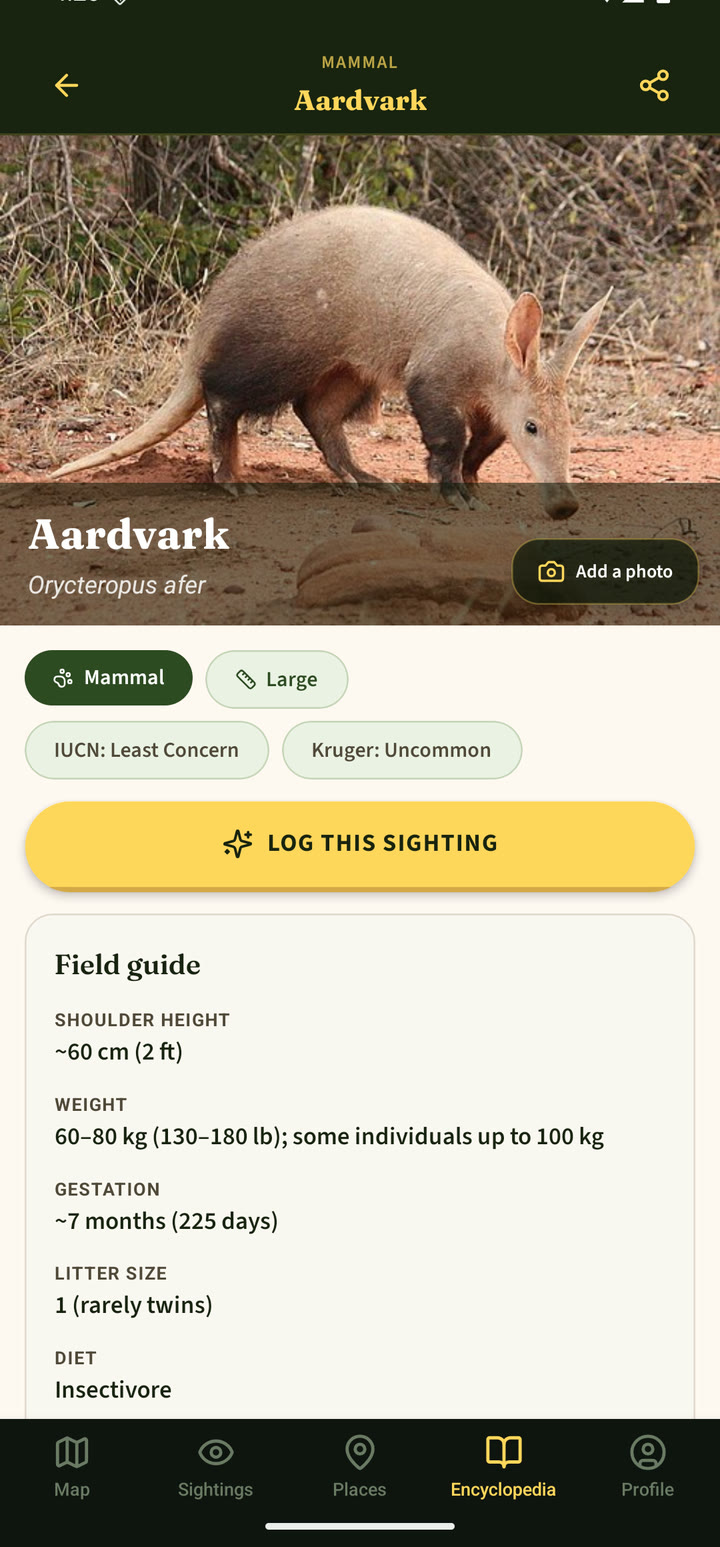
The field guide
941 species: 519 birds, 142 mammals, 103 reptiles, 101 insects, 34 fish, 23 amphibians and 19 arachnids. Each page carries the facts you'd otherwise be guessing at: size and weight, gestation, litter size, diet, behaviour, habitat, and where in the park you have a real chance of finding it.
Species calls play with a scrubbable waveform. The trait finder asks what you noticed — kind of animal, time of day, habitat, what it was eating, shape — and narrows 941 entries to a handful, with no signal needed. Big legible headings, photos where we have them, and an honest "we don't know yet" instead of filler. Every page shares as a link or an on-device QR code.
Corrections are a feature. Every page has a report button. Rangers, guides and sharp-eyed visitors have straightened us out more than once, and the fix ships to everyone.
The map and the places
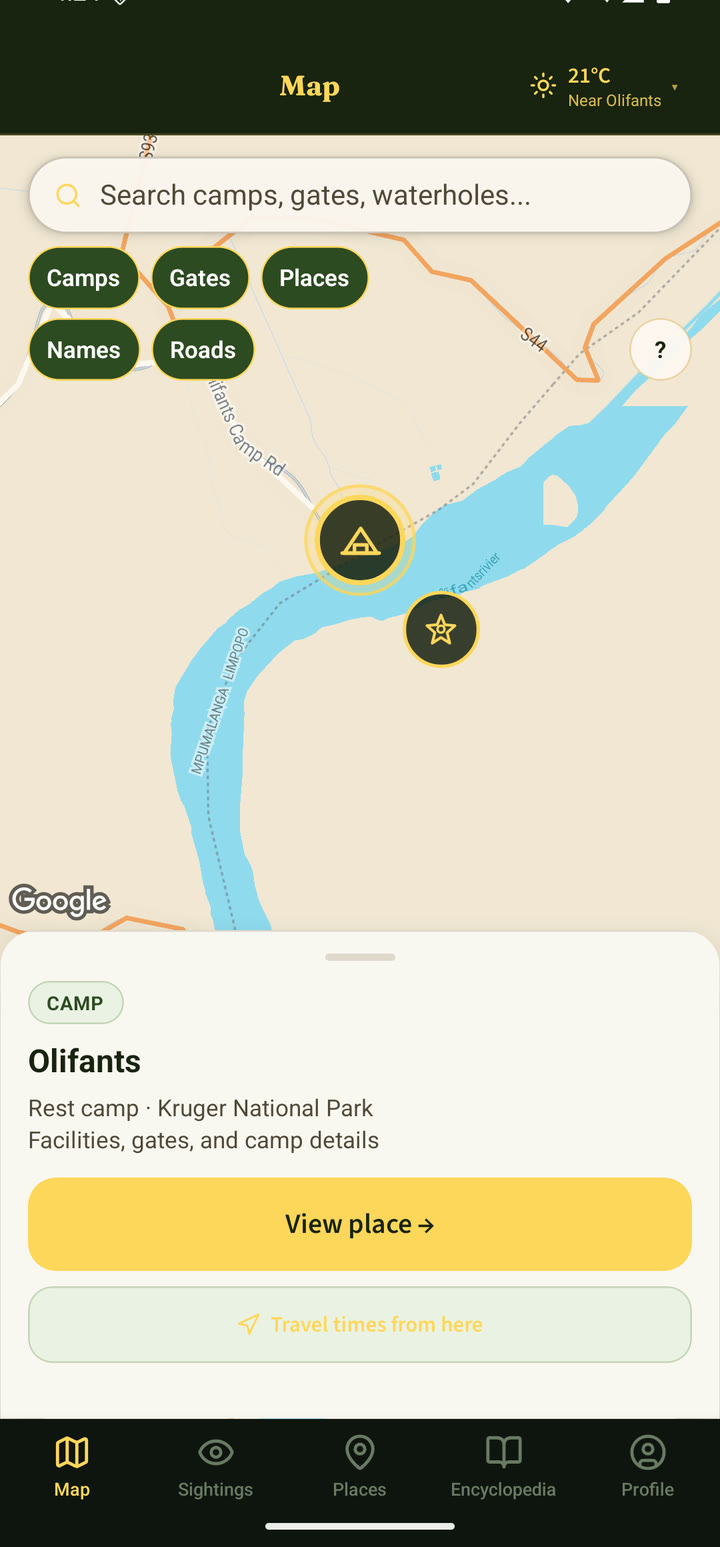
Every road, labelled with its distance. All 12 main camps and the gates between them, each with summer and winter times (winter gates open later and close earlier, and that catches people out). Picnic spots, hides, waterholes and viewpoints, filterable so you can strip the map back to just the thing you care about.
SANParks' own travel table gives the distance and a realistic time between any two camps or gates, at a pace that allows for stopping. Leave-by reminders work back from your gate's closing time, a countdown shows how long you have, and the weather panel runs the forecast next to sunrise and sunset.
Camp pages carry photos by category and unit, interior layout maps, facilities, malaria notes and tap-to-call contacts.
Routes and the drive planner
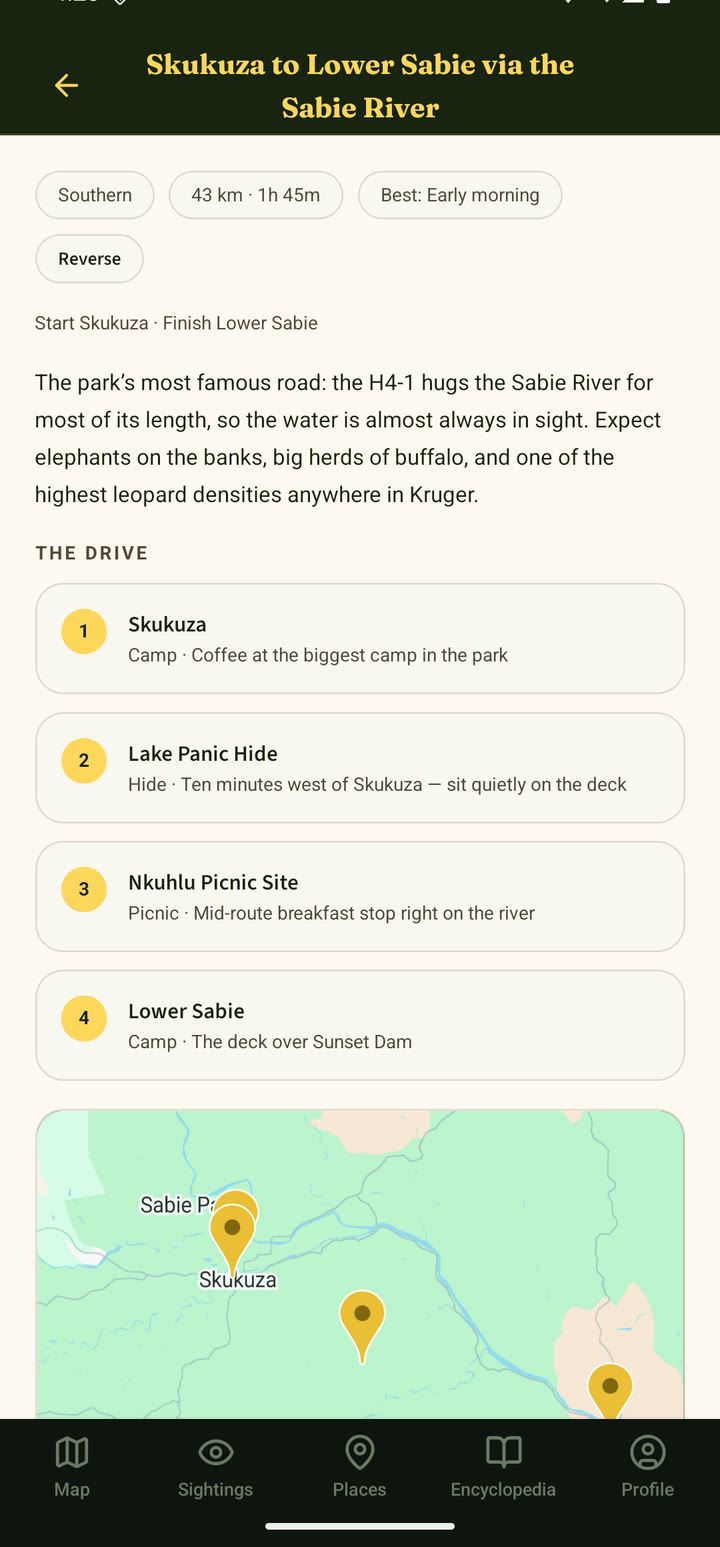
Eight curated routes with an ordered list of stops, the distances between them and the reason each one is worth driving — the H4-1 along the Sabie, the S28 cat country, the H1-4 north from Satara. Reverse any of them when you're coming from the other end.
Build your own day from the camps and gates: add stops, choose how long you'll stay (pass through, 15 minutes, 30, an hour), and see distance, driving time, stop time and the total. The planner checks the gate window and tells you plainly: leave by 14:25 to be back by 18:00.
The whole calculation runs on the phone over data that already ships offline. No signal, no problem.
Sightings and the field journal
Report what you find: species, a pin, a photo if you got one, and notes on behaviour. Reports are checked before they go public, which keeps the feed worth reading. Browse by camp or see what's near you, on the map or in the feed.
Each sighting can be shared as a link, so sending that leopard to the family group chat takes one tap. Exact rhino locations stay out of public posts, by design.
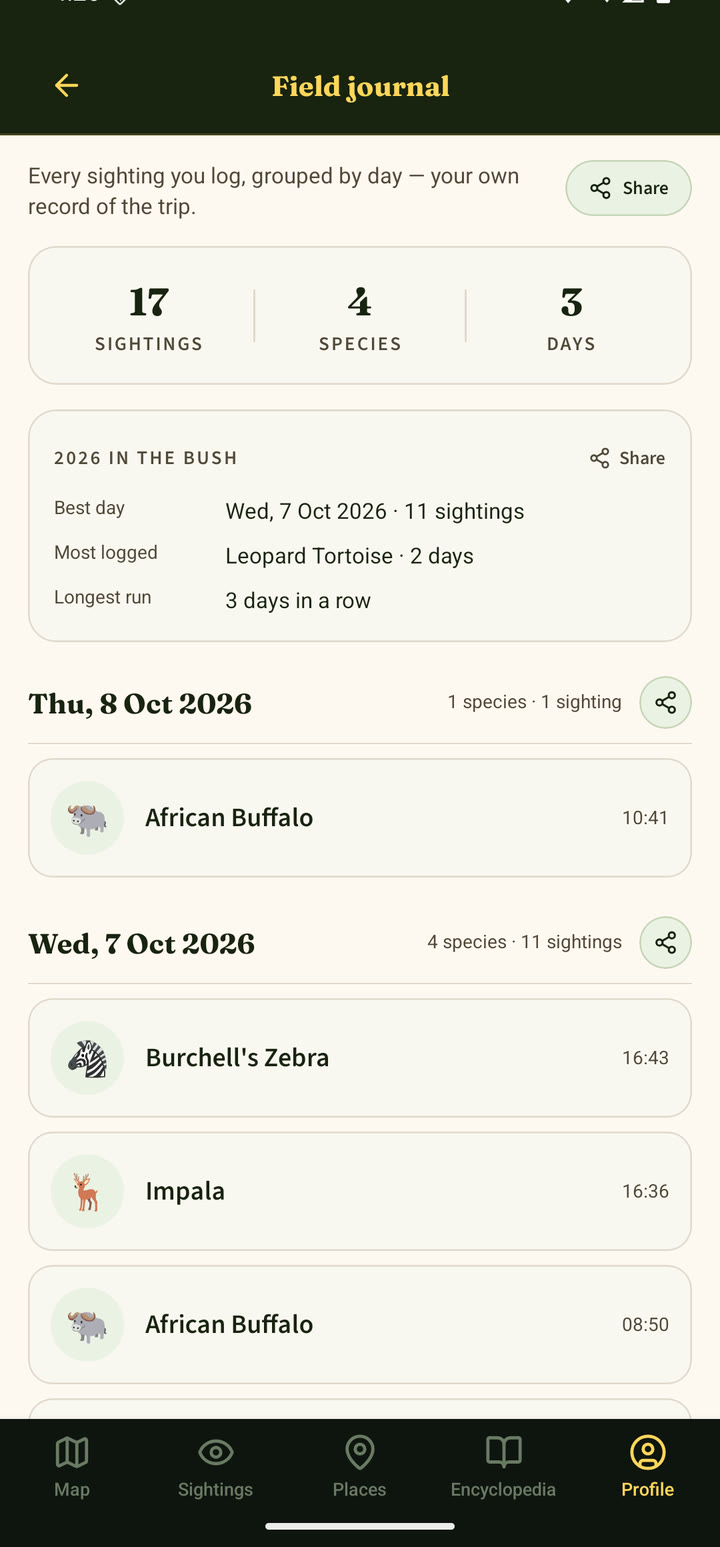
The field journal is yours: every sighting grouped by day, a life list with first-seen dates, species history, a year recap, and sharing when you want it — one day at a time or the whole trip.
Kruger collections
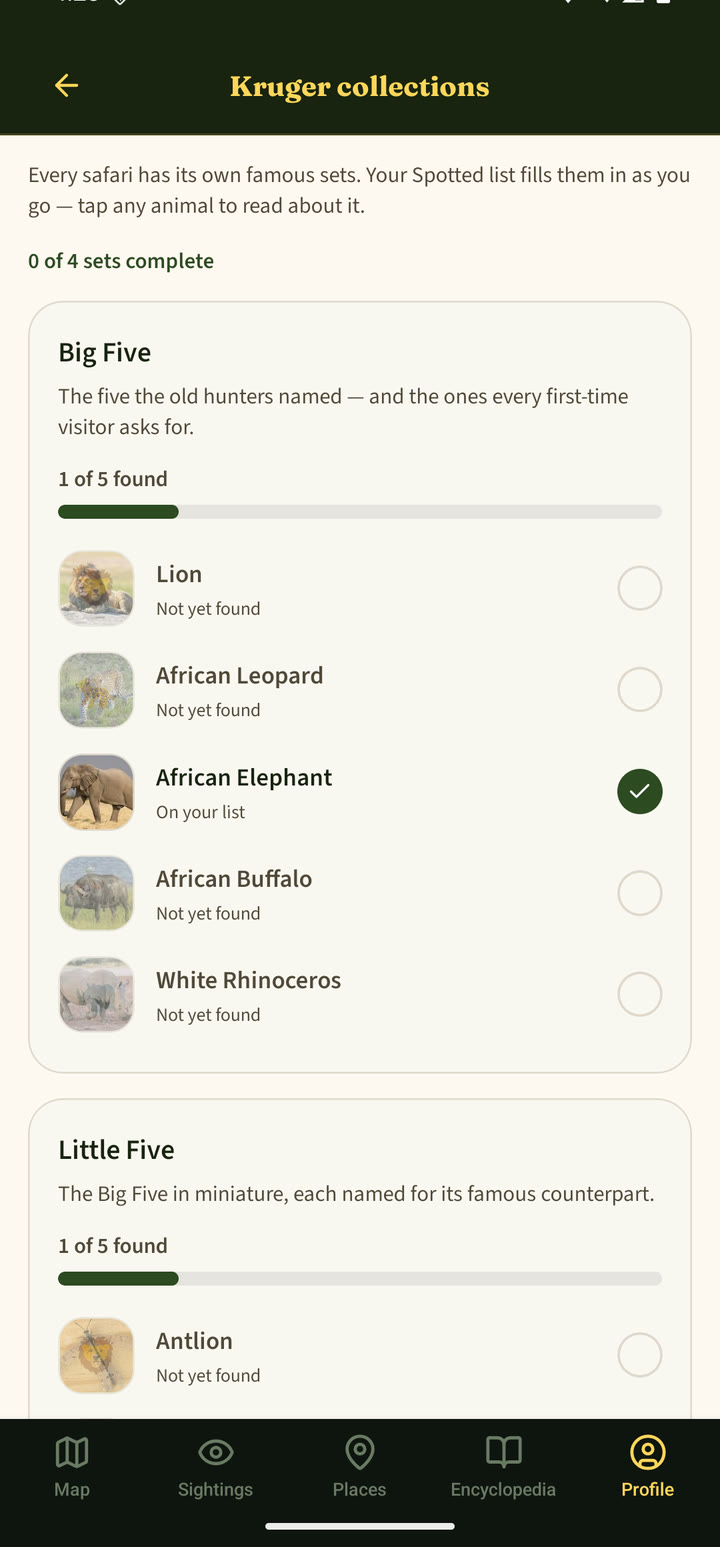
Every safari has its famous sets. The Big Five, the Little Five (the big ones in miniature), the Ugly Five clean-up crew and the Secret Seven nocturnal regulars — each with its own progress, filled in from the species on your spotted list.
Tap any member to read about it. It's the hunting list, minus the hunting.
Offline, Explorer and dark mode
A free account gets you the guide, the map, gate times, the routes and the drive planner; there's no subscription in the way of any of it. When the signal goes, cached pages stay put and a quiet strip tells you why.
Explorer adds the offline field guide — one download, the whole guide on the phone — and community sightings 15 minutes after they're approved instead of 12 hours. It's the version that still works at 5am on a dirt road.
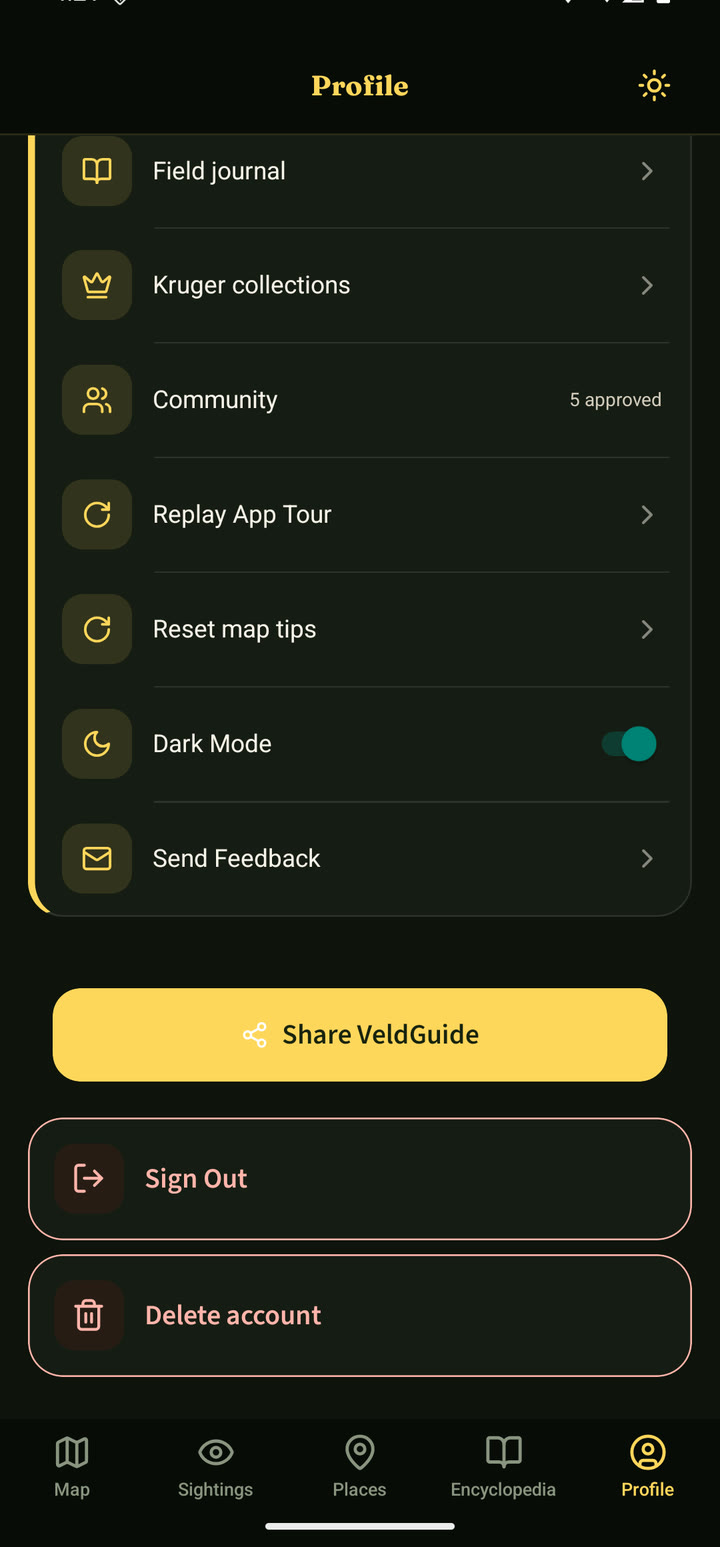
Dark mode that's actually dark, text that survives full sun, and no paywall ambush in the middle of a leopard sighting.
What's next
An offline base map, family challenges and more curated routes are on the list. The order of that list is set by what people email us about, so if something bugs you in the app, say so.
Get it before your next trip
VeldGuide launches on iOS and Android soon. Ask us for a nudge when it does.